Case Study
Dynamic Glucose — Structuring a Health Program into a Guided Digital Experience
Product Design
Context
Dynamic Glucose is a health program designed to prevent and manage diabetes through structured nutrition, exercise, and behavioral change.
The product operates across multiple touchpoints, combining a marketing website, an assisted onboarding experience, and a mobile app for daily program execution.
Unlike traditional health apps, this system is deeply connected to a real-world clinical context, where patients are introduced to the program through doctors, enrolled with the support of assistants, and guided through a structured process.
This created a unique design challenge: translating a complex, multi-actor health service into a clear, guided, and actionable digital experience that users could realistically follow over time.
Overview
The experience was structured as a guided journey, where users move from low awareness to active participation in a long-term program.
At the beginning, users are not necessarily motivated or informed. The system gradually introduces structure, helping them understand what to do, why it matters, and how to stay consistent over time.
Instead of relying on user initiative, the product defines:
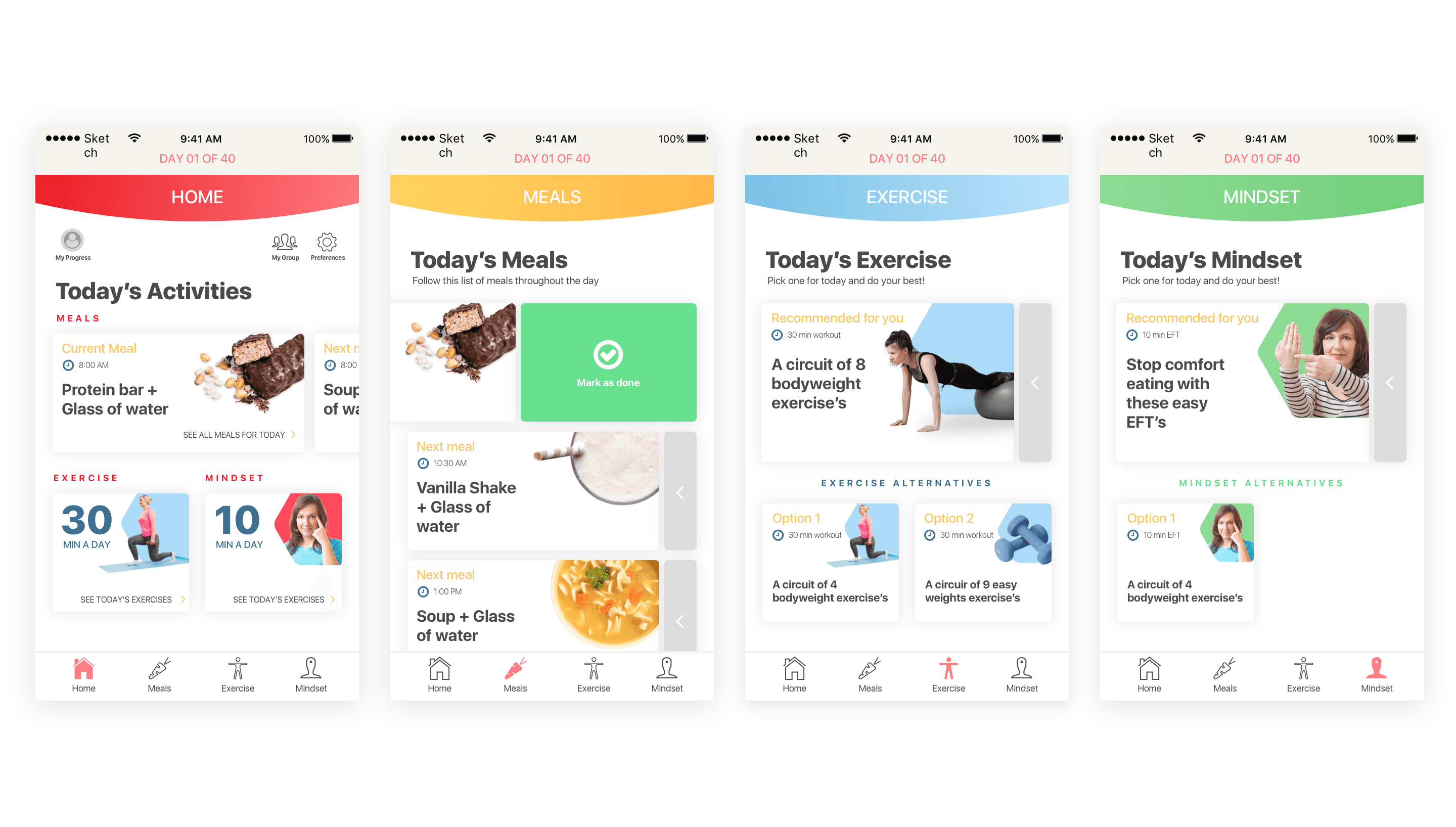
What to do each day
When to do it
How to progress through the program
This shifts the experience from a typical health app into a structured program, where decisions are reduced and adherence becomes more achievable.
The Problem
Users are expected to make significant lifestyle changes, but the path to doing so is often unclear.
The program requires consistency across multiple areas:
Nutrition
Physical activity
Daily habits
However, users typically start from a point of uncertainty and low structure, without a clear understanding of what to do, how to do it, or how to sustain it over time.
At the same time, the program itself introduces a level of complexity that is difficult to manage without guidance:
Multiple variables that need to be coordinated
Long-term commitment before seeing results
Decisions that need to be made repeatedly
This creates a gap between what the program demands and what users can realistically execute on their own.
The core problem was designing an experience that could translate that complexity into a clear, structured path, making consistency achievable rather than overwhelming.
Key Challenges
Translating the problem into a functional experience required addressing a set of specific design challenges:
Turning ambiguity into a clear starting point
Users enter the system without a defined structure. The experience needed to provide a clear first step without overwhelming them with the full complexity of the program.Designing for commitment early on
The program depends on long-term adherence. The onboarding experience had to build commitment before results are visible, not just collect information.Balancing guidance with user agency
Providing structure reduces friction, but too much control can feel restrictive. The system needed to guide decisions while still allowing users to feel ownership of their choices.Coordinating multiple inputs into a coherent plan
User data spans lifestyle, preferences, and habits. The challenge was to translate fragmented inputs into a unified, actionable program.Sustaining engagement over time
Initial motivation is not enough. The experience needed to support consistency beyond the first interaction, reinforcing behavior as part of a routine.
System Design
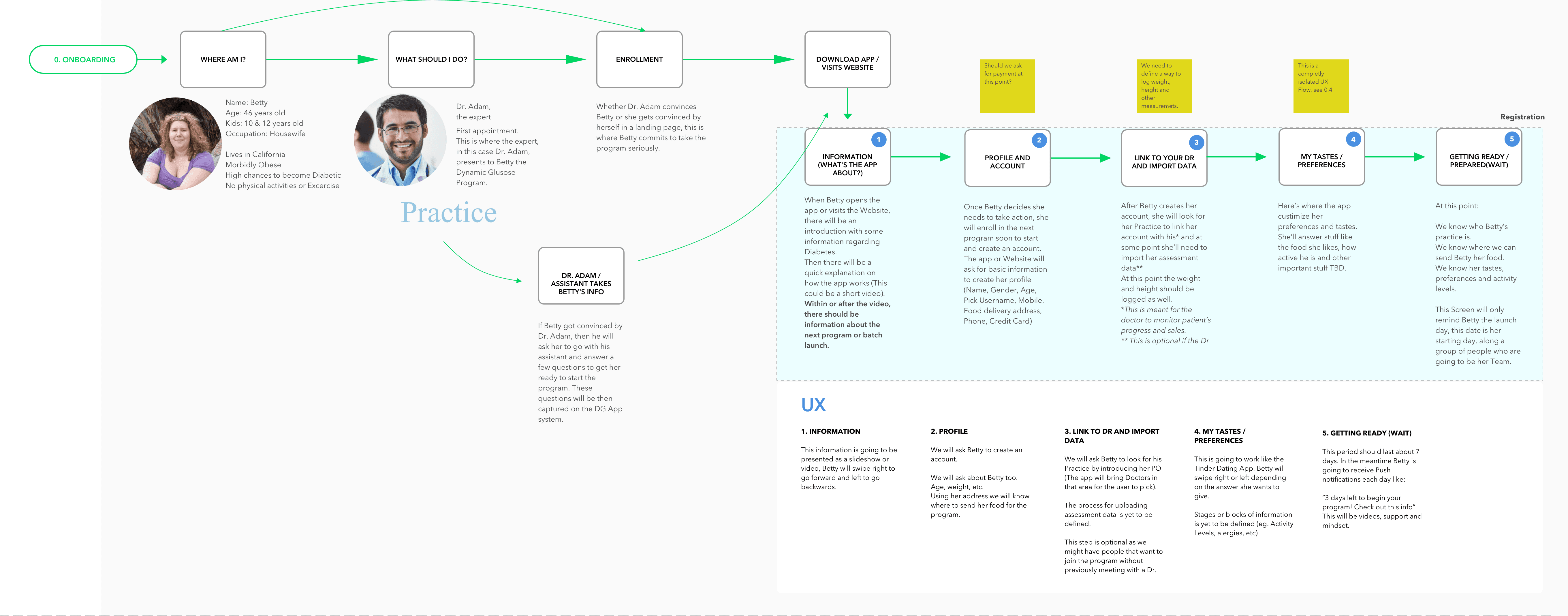
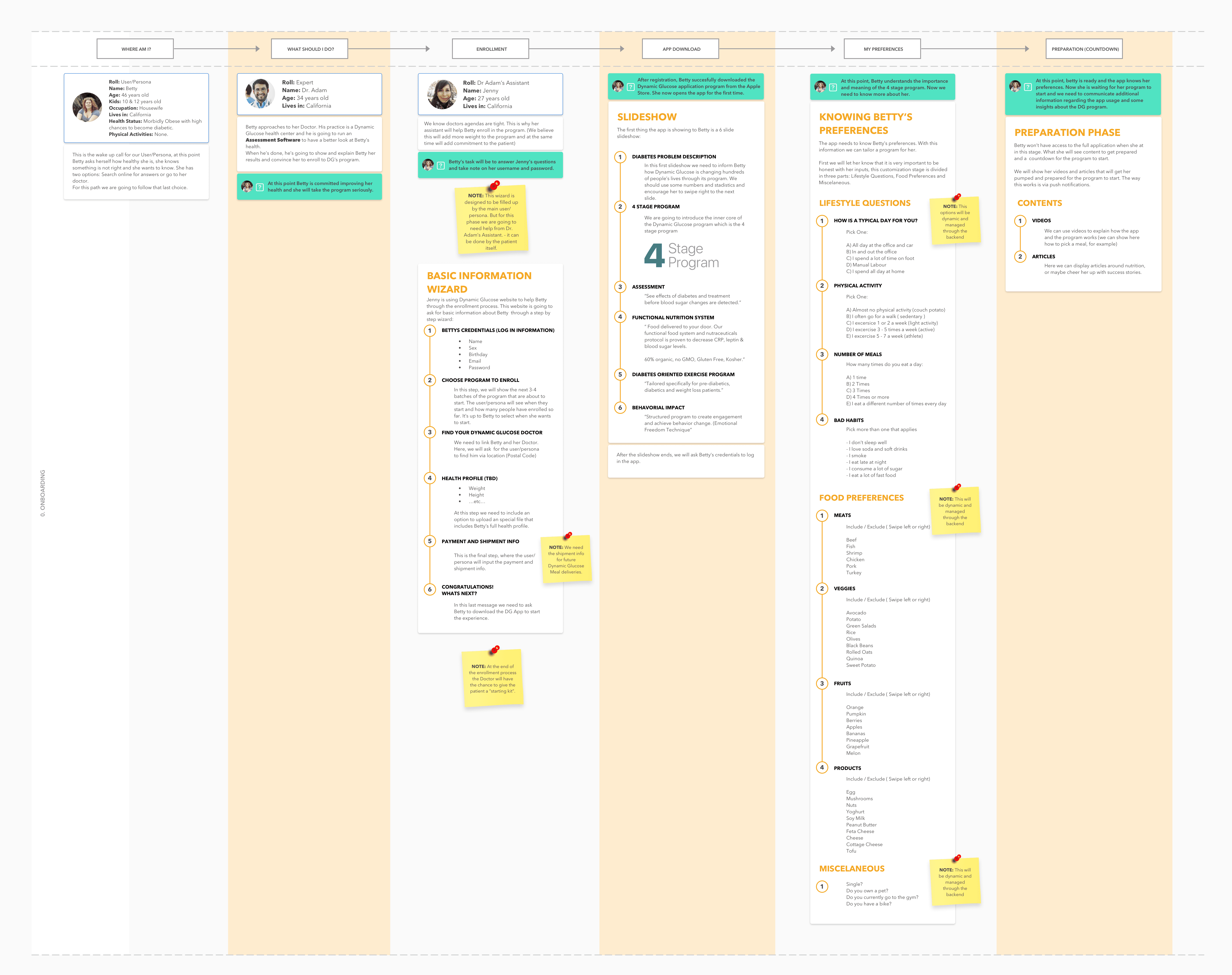
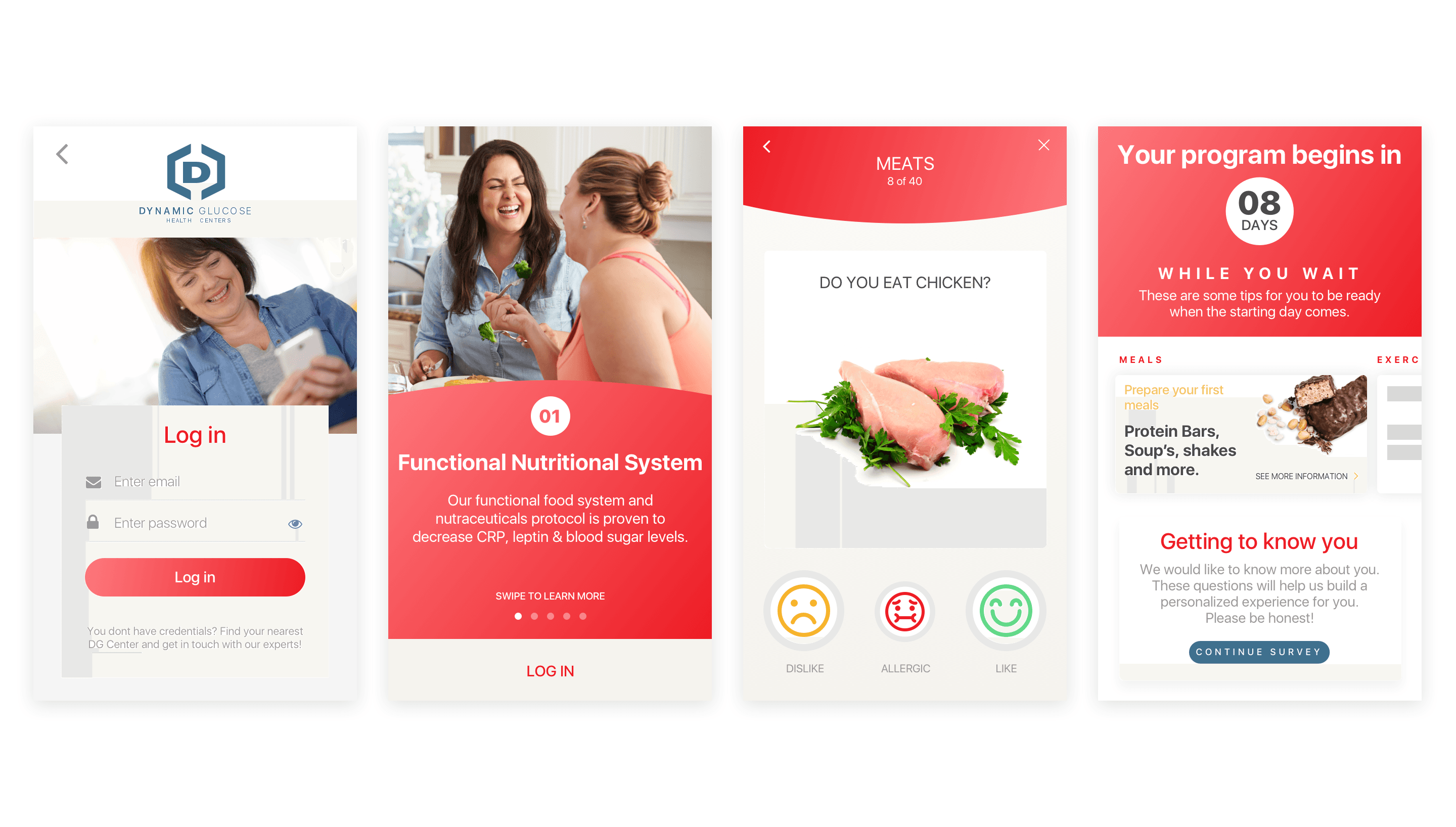
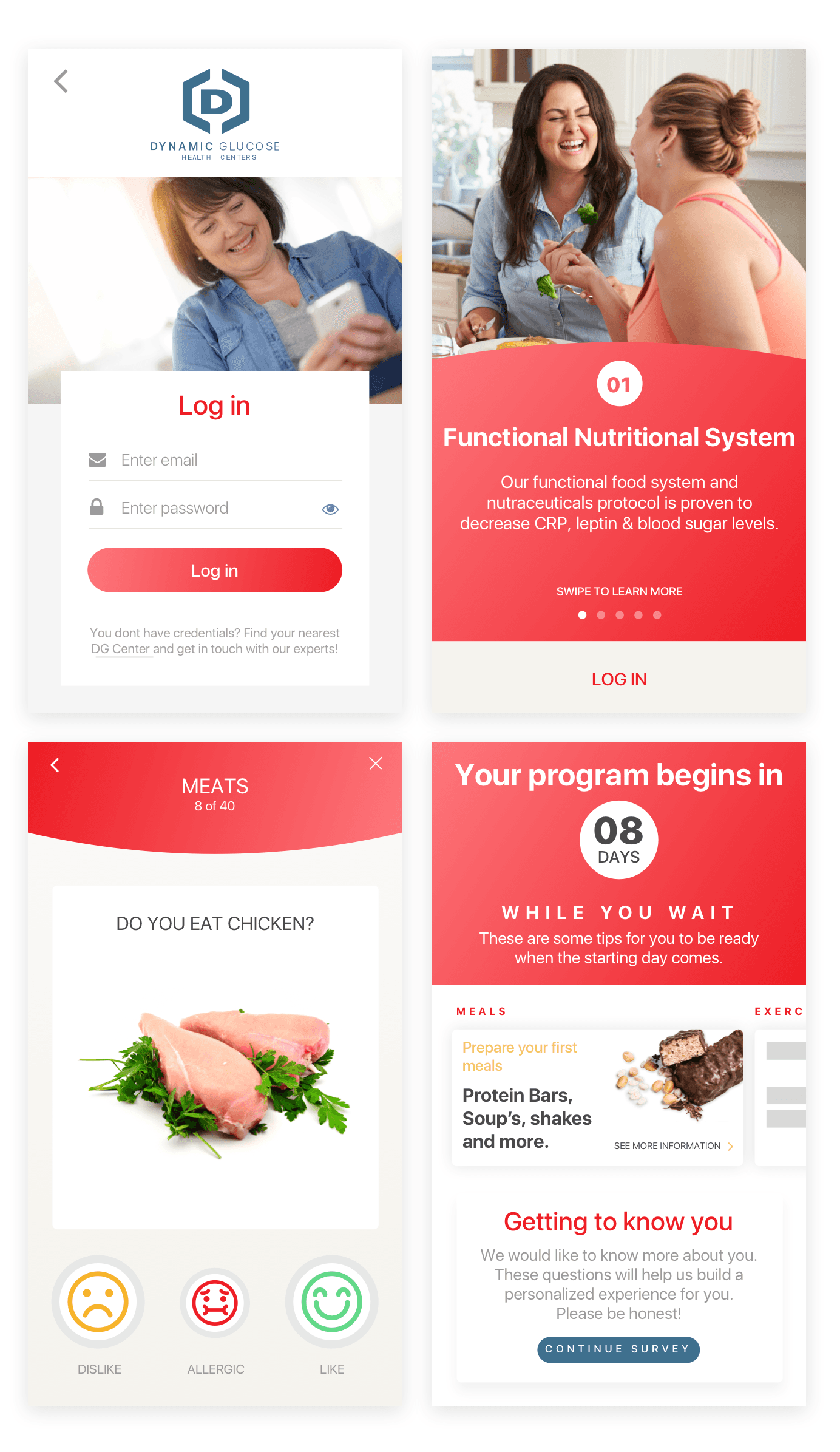
To address these challenges, the experience was structured as a coordinated system, where each stage has a specific role in supporting user progression.
Instead of concentrating complexity in a single interaction, the system distributes it across moments:
Introduction → framing the program and setting expectations
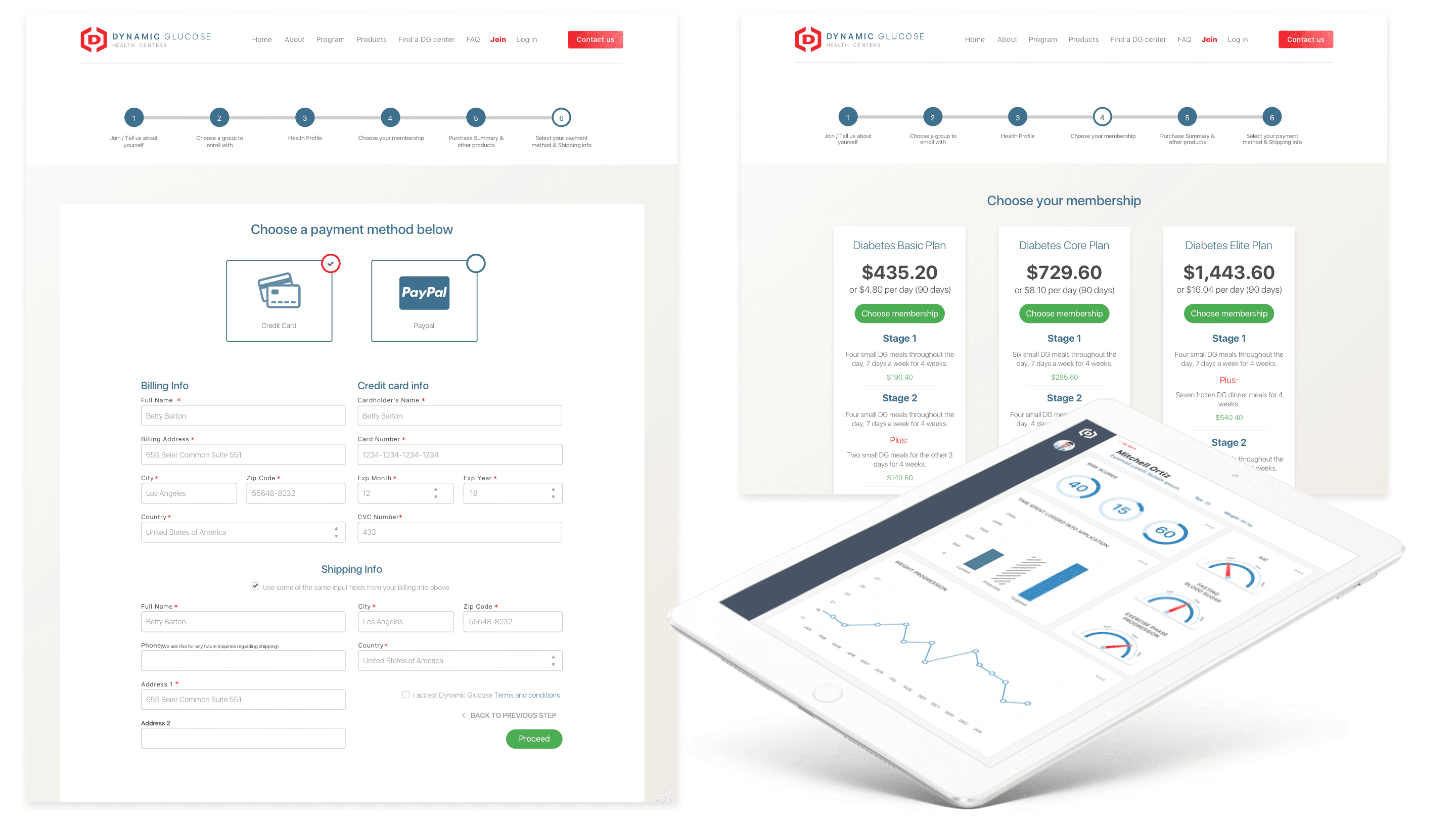
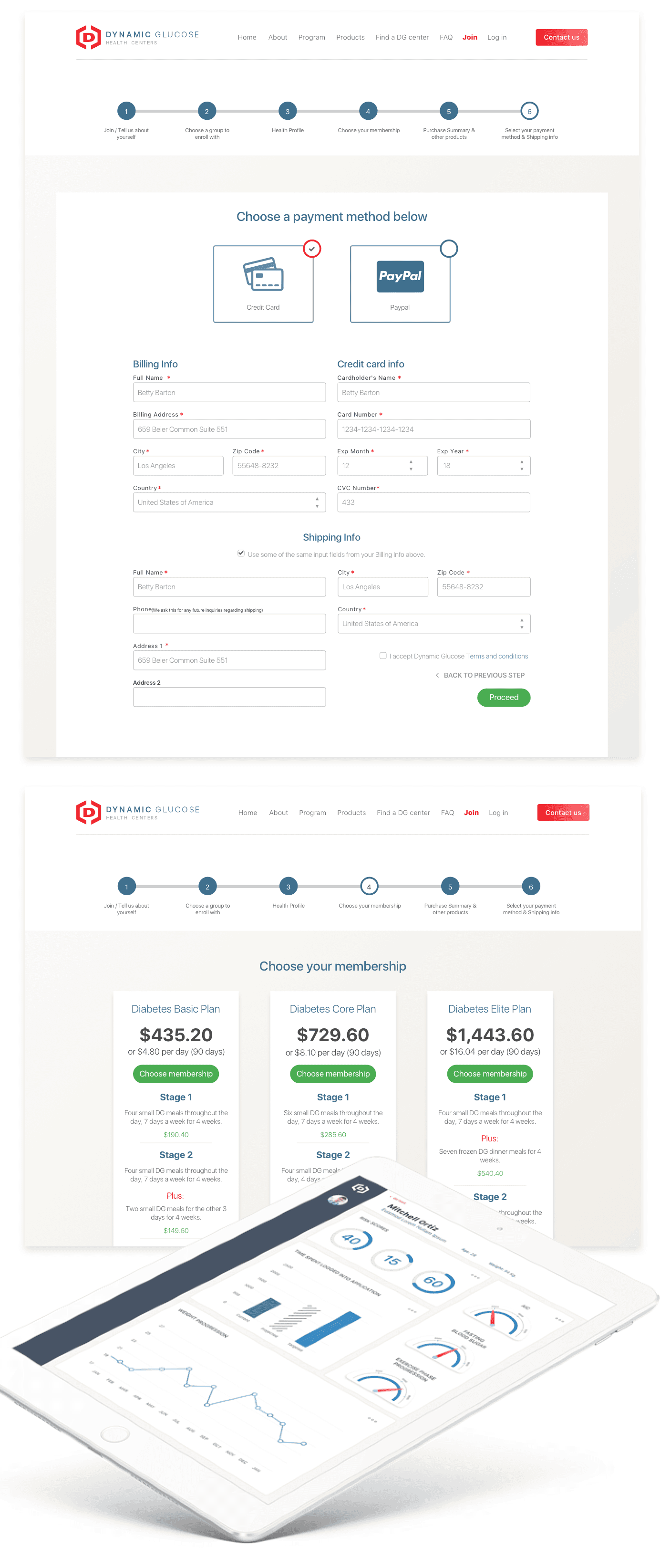
Enrollment → capturing inputs and establishing commitment
Preparation → building readiness before the program begins
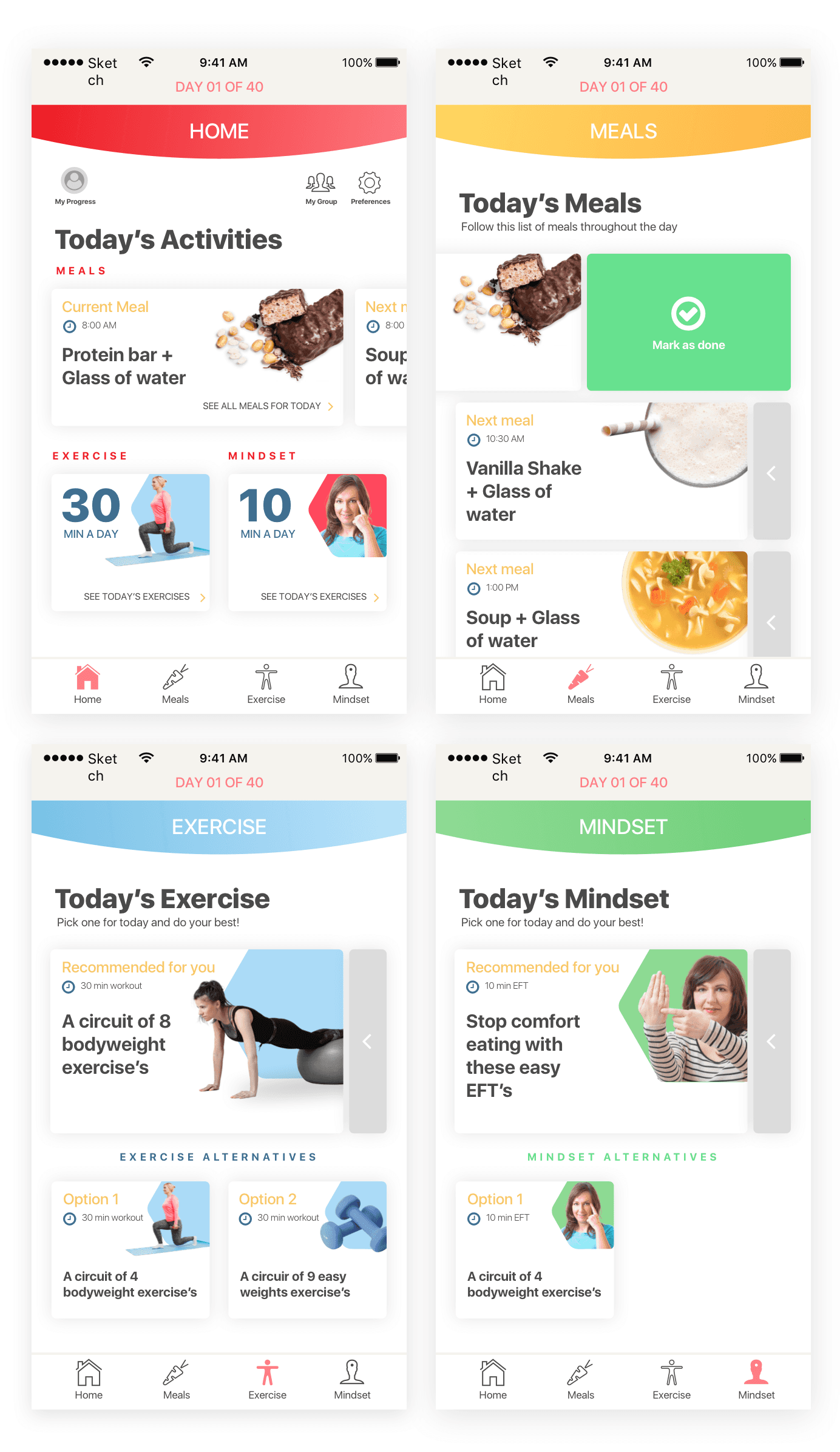
Execution → guiding daily behavior through structured actions
Each stage is intentionally scoped to answer a different user need, allowing the experience to unfold progressively rather than overwhelming users upfront.
This structure also enables the system to adapt over time, using early inputs to shape later interactions, and shifting from guidance to routine as users move forward.
End-to-end journey
The experience is designed to shift the user’s role over time.
At the beginning, users rely heavily on guidance. They are introduced to the program, supported through enrollment, and given clear direction on what to do.
As they move forward, that dependency decreases. The system gradually transitions from explicit guidance to repeatable routines, where users no longer need to interpret instructions—they simply follow a structure that has already been established.
This progression transforms the experience from something that feels new and uncertain into something that becomes predictable and sustainable.
The goal is not just to help users start, but to carry them from initial uncertainty to long-term consistency without requiring constant decision-making.
Growth & commerce ecosystem
Beyond the core program, the platform extends into a growth and monetization layer that supports both acquisition and ongoing engagement.
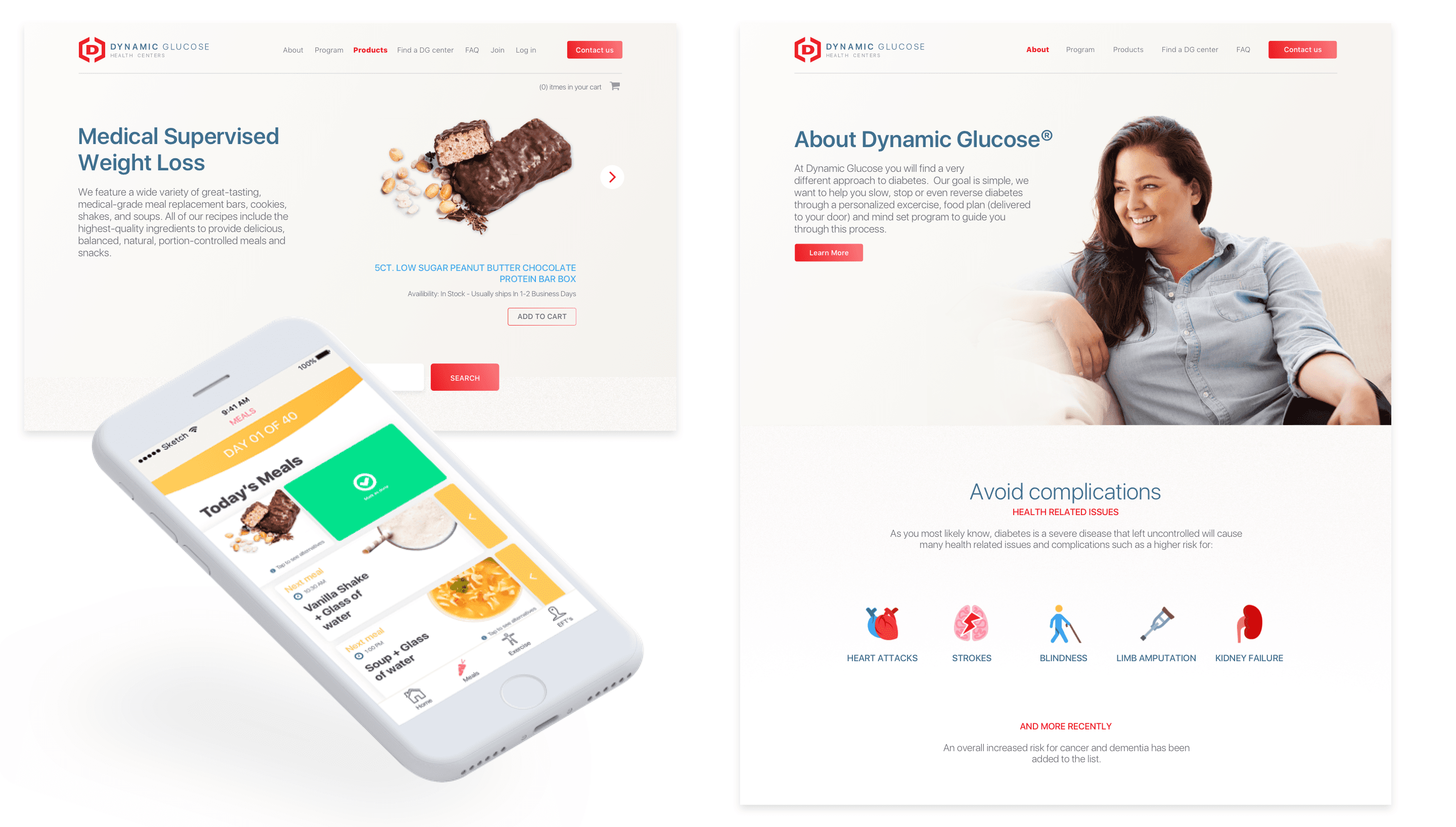
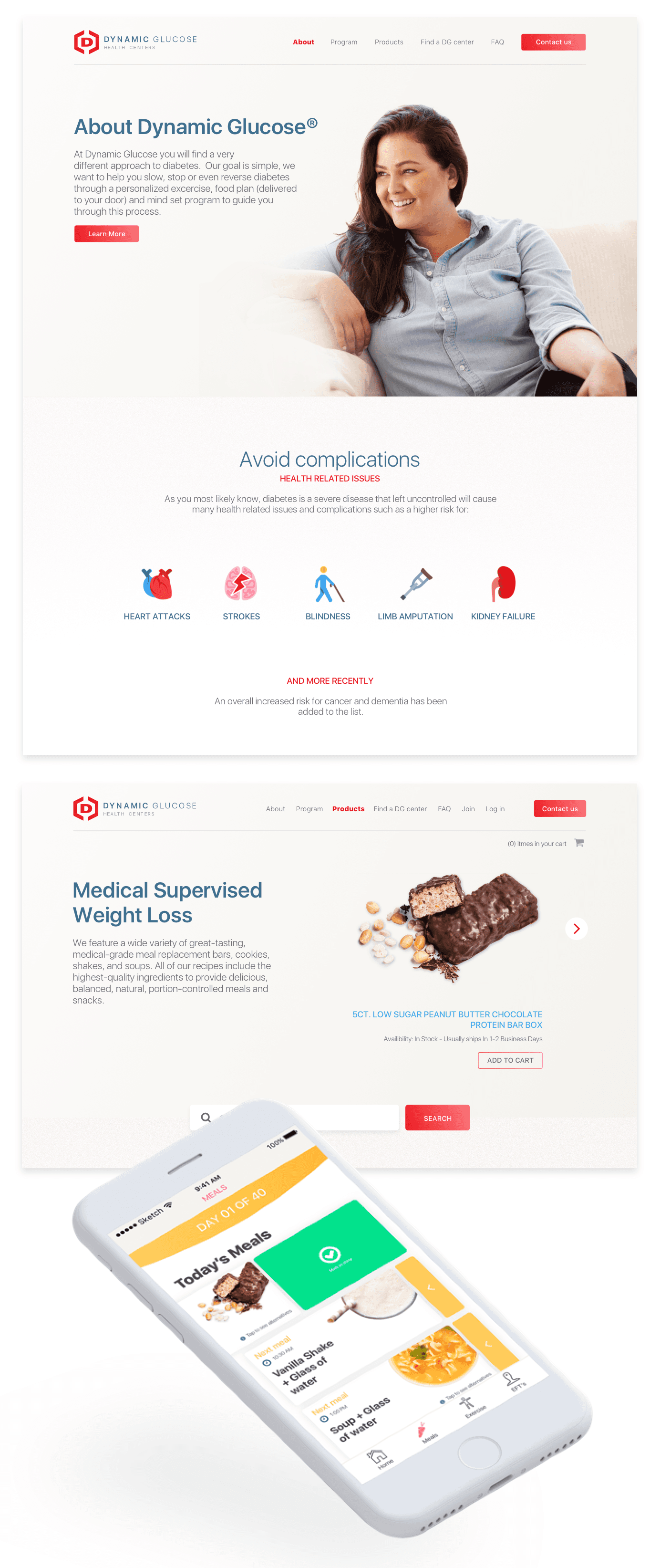
The marketing website introduces users to the program by combining education, credibility, and clear calls to action, helping them understand the value of committing to a structured approach.
Once inside the ecosystem, users can access a commerce layer that integrates directly with the program:
Nutrition products aligned with their plan
Categorized browsing and product discovery
A structured purchase flow connected to their participation
This connection ensures that recommended actions are not just theoretical. Users can immediately act on them, reducing friction between guidance and execution.
By aligning content, product, and experience, the system supports both user outcomes and business sustainability.
Key Insights
Working on this project shifted how I think about behavior-driven products. One of the most important realizations was that clarity has a stronger impact than motivation.
I also learned that commitment happens earlier than expected. The critical moment is not when users start using the product daily, but when they decide to engage with the program in the first place. That decision shapes everything that follows.
Another key takeaway was the role of structure in reducing cognitive load. By defining what to do in advance, the system removes the need for constant decision-making, making consistency more achievable over time.
Ultimately, behavior change is not driven by isolated interactions, but by continuity. The experience needs to connect actions across time, allowing repetition to turn into routine.
What I would improve?
Looking back, this project was developed around eight years ago, which also reflects the context in which many of these decisions were made.
The visual layer is one of the areas that would benefit the most from refinement. While the experience is well structured, the interface relies on patterns and styles that feel dated today. A more cohesive visual system, with stronger typography and more intentional use of imagery, would elevate the overall perception of the product.
Another area is feedback and reinforcement. The system defines what users should do, but it could do more to reflect progress back to them. Making progress more visible—through clearer feedback loops or milestones—would strengthen motivation over time.
The onboarding could also be simplified. While it captures valuable information, it asks users to process a lot upfront. A more progressive approach, where some decisions are deferred or inferred, could reduce friction without losing personalization.
Even so, the core of the project—structuring a complex program into a clear, guided experience—remains highly relevant, and continues to inform how I approach product design today.
Credits
Product Design → Oliva Meg
Project Lead → Bob Cruz
Other work
© 2026 Oliva Meg
Designed with Figma and Published with Framer